
In God’s Name: The Treatment of Homosexuals by the Christian Church
by Terry Hiscox
This article was pulled from internet archives and was originally published in 1998. Some edits and updates have been made to the original text. It’s possible information this article treats as current is out-of-date and readers are encouraged to verify with more recent sources. If you believe an update should be made to this text, please let us know.
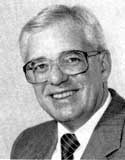
Terry Hiscox
Over several millennia, homosexuals (or any other appellation ascribed to this community) have enjoyed various degrees of acceptance or tolerance within broader society. During the golden age of Greece, acceptance would likely have been the correct terminology. During the early Middle Ages tolerance may have applied, and later hatred came into vogue. Coming to the closing decades of the twentieth century, acceptance of homosexuality is gaining momentum again. However, for almost two millennia, one large and powerful institution has been vociferous in denouncing homosexual practices. This institution is the Christian church. Of course, there are some exceptions to this broad generalization, but, in the main, overall condemnation continues to hold sway.
This paper delineates atrocities, committed in God’s name, against the homosexual community. A cross-section of Christian groups is named, and particular practices, both from their past and contemporaneously, are laid bare. Sampling is proffered from the Catholic, Protestant, and Mormon Church traditions.[1] In particular, this paper examines some traditions of the “early” church, and the vitriolic rhetoric promulgated by the Westboro Baptist Church of Topeka, Kansas citing the scriptural imperative that dominates their thinking militated against homosexual behavior.
Following this analysis, this paper will explore, from early Christian history, scholarship suggesting that the early church solemnized same-sex marriage, and then will examine the views of contemporary Christendom. Of particular interest will be the current political posturing by various Christian groups against the potential legalization, in 1998, of same-sex marriages in the State of Hawaii. Moving from same-sex marriage, an explication of the efforts by certain Christian groups to “convert” gay people into heterosexuals is scrutinized. Various “ex-gay” ministries are reviewed together with their claims of success.
This paper concludes with an explication of the treatment of gay and lesbian students and teachers on the campus of Brigham Young University (BYU) in Provo, Utah. This university commonly referred to by the Mormon community as the “Lord’s” university, is wholly owned and operated by the Church of Jesus Christ of Latter-day Saints, otherwise known as the Mormon or LDS Church. From the late 1950s to the present, the LDS Church has had a continuous policy to root out all unrepentant homosexuals on its campus, leading to psychological trauma and suicide — all of which will be critiqued. In addition, the strident efforts of the Mormon Church to, using another’s term, “torture” adherents into a heterosexual orientation are examined.
Germane to this paper is a review of the theological underpinnings of Mormon dogma that is necessary so that the reader may understand the particular trauma that a homosexual acolyte of that particular faith may undergo because of their belief. A brief history follows: In Mormon lore, the Church of Jesus Christ of Latter-day Saints is the “restored” gospel and church government established by Christ originally. They accomplished this through a “latter-day” prophet named Joseph Smith. The Mormon church’s explication of how this came about has been canonized into scripture in a book called The Pearl of Great Price under the rubric of “Joseph Smith, 2.” In this book, the reader finds the story of Smith’s “calling” as a prophet. Smith explains that God and his son Jesus, in their respective persons, visited him in answer to his prayer of what church he should join. According to Smith, God advised him, in 1820, that he must join none of them because all the churches of Christendom were an “abomination in his sight” because of their creeds and that all their ministers were corrupt.[2] This history goes on to state that Joseph was the instrument that God ordained to “restore” the gospel of Christ in its original purity.
From The Pearl of Great Price, one learns that in Mormon theology all Christian churches are of the Devil and that the Mormon Church is Christ’s one-and-only “true” church through which one’s salvation can be gained. This dogma has great power over those that believe in the gospel as established by Joseph Smith. For example, if the Mormon Church excommunicates a believer for homosexual activity they are doomed for eternity. To quote a modern-day prophet of the Mormon Church, Spencer Kimball states, “As an excommunicant [sic], he is in a worse situation than he was before he joined the Church. He has lost . . . his claim upon eternal life. This is about the saddest thing which could happen to an individual. A true Latter-day Saint would far prefer to see a loved one in his bier than excommunicated from the Church.”[3]
Although patriarchy is nothing new to Christendom, the Mormon Church perhaps represents the apogee or ne plus ultra in top-down management. Women have no standing in the hierarchical management of the church. The priesthood is solely a male function often referred to by female Mormon liberals as the penishood. The president/prophet of the Mormon Church, his two counselors, and the Quorum of the Twelve Apostles are the presiding authority in this church. The membership sustains them as “Prophets, Seers, and Revelators.”[4] It is a commonly held belief, by rank-and-file Mormons, that the Saviour meets with this illustrious group of men in the Salt Lake City temple weekly and conducts the affairs of His Church — such is Mormon folklore.
Joseph Fielding Smith, one of the twelve apostles and later church president, said in 1945 to all members of the Mormon Church: “When our leaders speak, the thinking has been done. When they propose a plan — it is God’s Plan. When they give directions, it should mark the end of controversy, God works in no other way.” (my emphasis).[5] A more contemporary church apostle and member of the First Presidency said in 1979, “When the Prophet speaks the debate is over.”[6] These statements are an epiphany to those that study Mormon psychology. In effect, they expect ordinary Mormons to abrogate any pretense towards critical thinking and subrogate their agency to that of ‘the Prophet’. Based on these statements, it is easy to see how a homophobic leadership could easily influence anti-gay thinking among true believing members of this church when they construe their prophetic pronouncements to be the mind and will of the Mormon god.
The aforementioned thinking and theological dogma have brought forth some interesting musings by various church apostles and prophets that many members of this church accept as the “gospel” and must be practiced to be in full fellowship with the Church. To wit, Apostle Bruce McConkie wrote, “Loss of virtue is too great a price to pay even for the preservation of one’s life — better dead clean, than alive unclean.”[7] What McConkie is referring to is that dying while trying to defend oneself from a rapist, is better for a woman than to submit to her attacker and lose her virtue. McConkie continues in his book, Mormon Doctrine, to quote other Mormon apostles and prophets. Quoting from Joseph F. Smith’s book, Gospel Doctrine, Smith said, “‘We hold that sexual sin is second only to the shedding of innocent blood in the category of personal crimes. . . .’”[8] It is hard for most rational humans to understand a mindset that equates sex as second only to murder if done outside of the bonds of matrimony.
Into this miasma of guilt comes Spencer W. Kimball, another apostle and later a long-serving prophet/president during the 1960s and 1970s. He wrote a book, published in 1969, called The Miracle of Forgiveness. This book is long on condemnation and has a paucity of anything much related to the forgiveness of sin. The book enumerates a litany of crimes against the so-called gospel of Christ and His Church. From chapter six, which falls under the rubric “Crimes Against Nature,” one finds the following theological gems to contemplate. After a long treatise on the evils of masturbation, Apostle Kimball posits that masturbation “often leads to grievous sin, even to that sin against nature, homosexuality. For, done in private, it evolves often into mutual masturbation — practiced with another person of the same sex — and thence into total homosexuality.”[9]
Kimball calls homosexuality “a sin of the ages” and suggests that “perhaps as an extension of homosexual practices, men and women have sunk even to seeking satisfaction with animals.”(my emphasis)[10] Continuing his rant against homosexuality, he denounces those homosexuals who “attempt to justify oneself in this perversion” by stating that “‘God made them that way.’” He calls this blasphemy, saying that man is made in the image of God, and that God is not a “pervert.”[11] Speaking of other perversions in another section of his book he denounces immodesty in dress, stating that this is analogous to exhibitionism.[12]
The Mormon Church has long believed that it has been persecuted for its beliefs. This is not without some justification, inasmuch as they were run out of the United States into the territory now known as Utah for some of their peculiar religious practices such as polygamy. However, it is interesting to hear the contemporary views of one of its apostles and a prophet Boyd K. Packer of the Council of Twelve. In May 1993 he gave a speech to the “All-Church Coordinating Council.” In this speech, he outlined the greatest threat to the Church today. Subsequently, this talk has gained fame as the ‘Three Enemies Speech’. Packer said,
There are three areas where members of the Church, influenced by social and political unrest, are being caught up and led away. I chose these three because they have made major invasions into the membership of the Church. In each, the temptation is for us to turn about and face the wrong way, and it is hard to resist, for doing it seems so reasonable and right. The dangers I speak come from the gay-lesbian movement, the feminist movement (both of which are relatively new), and the ever-present challenge from the so-called scholars or intellectuals.[13]
It was clear from this address that these three distinct and diverse groups do not enjoy favor within Mormon culture.
Against these antecedents respecting the theological underpinnings of the Mormon Church, it is expedient to move onto a cursory view of the early Christian church and how homosexuals were treated in that earlier period.
Early Christianity
In speaking to the issue of homosexuality in the early church John Boswell, an assistant professor of history at Yale University, makes some interesting observations about the source of early Christian ethics in his 1980 book Christianity, Social Tolerance, and Homosexuality. It should be noted that most Christians today, in their advocacy against homosexuality, quote only the handful of scriptures in today’s Bible that speak to homosexuality. Boswell reminds his readers that the Bible, as contemporary society knows it, only came into existence in the sixteenth century. Therefore, the “Bible” was not the main or only source of early Christian morality. He posits, “It is, moreover, quite clear that nothing in the Bible would have categorically precluded homosexual relations among early Christians.”[14] He explains that “the word ‘homosexual’ does not occur in the Bible: no extant text or manuscript, Hebrew, Greek, Syriac, or Aramaic, contains such a word.”[15]
Boswell acknowledges that the famous story about the destruction of Sodom in the Old Testament has been interpreted as punishment for homosexual behavior by the inhabitants of the city. However, he notes that interpretation is of relatively recent in origin and that the destruction was based on the “inhospitable treatment of visitors sent from the Lord.”[16] To buttress his argument further, Boswell points out that “Sodom is used as a symbol of evil in dozens of places, but not in a single instance is the sin of the Sodomites specified as homosexuality.”[17]
In the book of Leviticus, which does proscribe against mankind lying with a man as with a woman, Boswell states that this is a misinterpretation of the original text and that the meaning is culturally specific.[18] As he states, “Almost no early Christian writers appealed to Leviticus as authority against homosexual acts.”[19]
Concluding his book, Boswell makes the following observations: Roman society in the first century did not make any particular distinction between gay and straight sex. It was just part of normal sexuality. He posits that the early Christian church did not pay any particular attention towards homosexual behavior. It was only from the third to the sixth century, as the Roman Empire deteriorated, that hostility towards homosexuality became noticeable. Boswell states that homosexuality enjoyed widespread acceptance by the eleventh century and then waned during the twelfth century and then degenerated further during the times of the Crusades and the Inquisition of the thirteenth and fourteen centuries.[20]
Having inadequately covered almost two millennia of Christian attitudes towards homosexuals in a few short paragraphs, it is time to move to modern twentieth-century attitudes, or at least the attitudes of a particular Protestant denomination in Kansas.
Westboro Baptist Church
Repeating the thesis of this paper, it is an exploration of the treatment of the gay community by the Christian church. It is this writer’s opinion that the Westboro Baptist Church does not represent mainstream Christian thought, but, certainly, it represents one of the more vociferous views and is therefore worthy of scrutiny. This church takes great pride in having had their views presented on such shows as “20/20″, “Eye on America,” “Ricki Lake,” and on PBS, Fox, BBC and a litany of worldwide electronic and print media. This church states,
Perceiving the modern militant homosexual movement to pose a clear and present danger to the survival of America, exposing our nation to the wrath of God as in 1898 B.C. at Sodom and Gomorrah WBC [Westboro Baptist Church] has conducted some 10,000 such demonstrations during the last five years at homosexual parades and other events (including funerals of impenitent sodomites).[21]
In this church’s published tracts, they freely state that the Christian god they worship “hates fags,” that fags are “freaks of nature,” that AIDS is “god’s cure for fags” and that the homosexual lifestyle is both soul-destroying and nation-destroying.[22] The obvious comment, “Is not God a god of love and that one should love one’s neighbor as oneself” is discounted in this church. The leadership of the church states that the Bible preaches hate. They excoriate preachers that are soft on homosexuals. They believe such rhetoric to be “damming this world to hell.”[23] They suggest that these preachers are telling their listeners what they want to hear rather than what they need to hear. In their view, what is needed to be heard is that “God hates people, and that your chances of going to heaven are nonexistent, unless you repent. What you need to hear is a little fire and brimstone preaching, like Jesus preached.”[24]
The Westboro Baptist Church believes that AIDS is a gift from God. It is God’s will and even people who contract AIDS from a blood transfusion, including babies or other innocents, should not complain because it is God’s will and the populace must understand that God’s ways are not our ways. They point out that God is not to be held to “humanistic standards of justice.”[25]
According to Westboro Baptist Church’s Web page, this group revels in picketing the funerals and grave sites of those that have died of AIDS. When asked if they have any evidence of “fags” having repented as a direct result of their picketing a spokesperson replied, “Who cares? Our job is to preach, and by our preaching we hope that people will be saved. However, Jesus is the Savior, not us. He will call His sheep.”[26] They go on to point out that, “We’re not saying ‘We hate fags’ — we’re saying ‘God hates fags’.”[27] This appellation became the name of their Web site.
There is no empirical way one can measure how much influence this group has. However, given the amount of media coverage this group “enjoys” it makes one fear for the homosexual community. This leads to the next subject of interest — gay marriage. It may not fall within the sanctity of the church, but it may fall under the purview of the law in 1998.
Gay Marriage: Is It a New Phenomenon of the Late Twentieth Century?
Many people believe that gay marriage is a phenomenon of the 1990s. According to the scholarship of Yale professor John Boswell, this paradigm is not true. In the August 11, 1998-edition of the Irish Times, writer and historian Jim Duffy reviews some findings of John Boswell from Boswell’s book The Marriage of Likeness: Same-Sex Unions in Pre-Modern Europe. According to the Duffy article, Boswell posits that same-sex marriage was solemnized by the early Christian church. Boswell points to a religious icon in a Kiev art museum that came from a monastery on Mount Sinai. This icon depicts the image of two Roman Christian martyrs, St. Serge and St. Bacchus being married in the Christian tradition. In addition, “the icon has Christ himself as their pronubus, their best man overseeing their ‘marriage’.”[28] Duffy goes on to state that Boswell “has discovered that a type of Christian homosexual ‘marriage’ did exist as late as the 18th century.”[29]
In addition, Boswell has found that the sacrament of marriage “has not been set in stone since the days of Christ, but has evolved both as a concept and as a ritual.”[30] Besides finding documentation about heterosexual marriage rites he also found documents relating to certain ceremonies under the rubrics of — “Office of Same-Sex Union” from the tenth and eleventh centuries and the “Order for Uniting Two men” dating from the eleventh and twelfth centuries.[31] He also lists the details associated with these same-sex unions emanating from ancient liturgical documents.[32] Not only did he find evidence of same-sex union in Kiev but from archives in the Vatican, St. Petersburg, Paris, Istanbul, and from the Sinai. These archives are from the eighth through the eighteenth centuries.[33] Duffy concludes his Irish Times article stating, “That evidence shows convincingly that what the modern church claims has been its constant unchanging attitude towards homosexuality is in fact nothing of the sort.”[34]
Despite the findings of John Boswell, it is not likely that mainstream Christianity will readily accept this evidence. Moving to the twentieth century, this paper will examine the potential of same-sex marriage in the State of Hawaii being proclaimed into law, along with the political machinations surrounding this initiative. To provide a brief chronology of this issue in the Aloha state, Richley Crapo of Utah State University gives insight into the position of the LDS Church from his 1997 paper titled, “LDS Doctrinal Rhetoric and the Politics of Same-Sex Marriage.” Following this chronology, the position of the Hawaii Christian Coalition is examined which is fronted by well-known television evangelist Dr. Pat Robertson of the 700 Club.
Crapo points out that a number of denominations/religions, such as certain branches of the Buddhist religion and Judaism perform same-sex marriages. The Metropolitan Community Church and the Unitarian Universalists will solemnize same-sex unions. Even two offshoots of the Mormon Church will perform same-sex marriages.
What precipitated the current imbroglio was a 1990 court case in Hawaii where Baehr vs. Lewin filed a suit in Hawaii to get the state to recognize marriages where the partners are of the same sex. Initially, the Circuit Court found against their petition but on appeal, the Supreme Court of Hawaii set aside that decision stating that unless the State of Hawaii could show “compelling state interest” against same-sex marriage such marriages would be legal. The state was unable to prove compelling state interest; this determination brought the matter before the state legislature.
In 1995 the LDS Church sued the Circuit Court in order to be named as a co-defendant in this case. The church claimed that its church membership would be adversely affected by a ruling in favor of same-sex unions. The Circuit Court dismissed this suit as did the Supreme Court upon appeal. Now that the process has reverted to the political realm, the Mormon Church is lobbying hard in trying to defeat the motion in the State Legislature. November 3, 1998 the people get to decide this issue on Election Day.
Update: The voters of Hawaii opted to give the state legislature the power to restrict marriage to opposite-sex couples. By the time the issue was considered by the Supreme Court of Hawaii in 1999, the court upheld the state’s ban on same-sex marriage. A civil union law for same-sex couples was passed in the state in 2012 and legislation making same-sex marriage legal was passed in 2013.
Crapo found that it is ironic that the Mormon Church is relying on the government to impose its view on marriage, which is in keeping with the values of the Mormon Church. Only a century before, the Mormon Church had vigorously opposed the authority of government to impose its peculiar definition of marriage and to limit the Church in its practice of polygamy. Even in LDS dogma, secular marriage has no effect in the eternities unless performed by the LDS Church in one of its temples, which is only available to certain “worthy” members of its congregation. In effect, the Mormon Church does not recognize secular marriage as efficacious before God.
Still, the Mormon Church fights the state-sanctioned same-sex marriage proposal in Hawaii. In 1996, Gordon Hinckley, the current Mormon president/prophet, made a special trip to Hawaii to rally the faithful in helping to defeat this legislative proposal. Hinckley “told a meeting of 20,000 people that they were enough to stop unwanted social change in Hawaii.”[35] Hinckley also curried the favor of the Roman Catholic Bishop of Hawaii, Francis X. Dilorenzo, in a private meeting to plot a common campaign against same-sex marriage. “Affirmation,” a gay and lesbian support group, found irony in this meeting pointing out that “the Catholic church officially refuses to recognize the power of the state to perform valid marriages or even to grant divorce, yet it purports to tell Hawaiian citizens what marriage and family in the civil sphere should be about.”[36] Chastity Bono, a prominent lesbian activist, succinctly states the gay community’s view of Christianities bias towards same-sex union: “‘People even think of the actual word — marriage — as a straight institution.’”[37]
In February 1996 the Mormon Church engaged a Hawaiian marketing agency, Hill and Knowlton, to serve the church as its official lobbying group. To maintain the pretext of the separation of church and state, the LDS church used its wholly-owned property management company, Hawaii Reserves, to actually contract the Hill and Knowlton agency. They gave this lobby group “‘unlimited funds’” to conduct their business on behalf of Hawaii Reserves a.k.a. the Mormon Church.[38]
Not only did the Catholic and Mormon churches commit to a common front against same-sex marriage in Hawaii, but the aforementioned Pat Robertson’s group is also conducting their own campaign. In an open letter to Christians, the Hawaii Christian Coalition is campaigning hard to raise $1,200,000 with which to mount a media blitz to fight this “moral decline.”[39] Their literature delineates five reasons why good people should contribute to the fight. The reasons are —
- The Bible condemns gay sex.
- Marriage, as we know it, created by God, will end.
- Gays will recruit children to their lifestyle.
- Some homosexuals are pedophiles who want the consent laws for sex removed.
- The same thing could happen to Hawaii that happened to Sodom, by God’s wrath.[40]
Robertson’s group reminds its readers, “Remember, all that is necessary for evil to triumph is for good people to do nothing!”[41]
Having briefly reviewed some literature on the same-sex marriage proposal in Hawaii, attention will now be focused on other Christian groups believe that they can “convert” homosexuals into heterosexuals through the gospel of Jesus Christ. If successful, God renders same-sex marriage moot. That is the next sub-text for analysis.
“Ex-Gay” Ministries
Until recently, ex-gay ministries have been relatively unknown. They have come out of the closet, so-to-speak. Ex-gay ministries are nondenominational Christian fellowships that attempt to minister the gospel to the gay community with the idea of “converting” gays into heterosexuals through the grace of God. Exodus International, established in 1976, is one of the largest groups in the United States. Newsweek called them “one of the better-kept secrets in the American church”[42] in their August 17 edition. No longer is Exodus unknown; on July 13 this group started taking out full-page ads in the larger newspapers in the United States. As recently as August 16, 1998, the television show Sixty Minutes ran a twenty-minute segment on Exodus.
As might be expected, condemnation was swift from the gay community and the psychiatric community. The gay community responded that Exodus is trying “‘to make homophobia acceptable.’” And, the psychiatric community reminded the public that there is no basis in science to believe that such a conversion could take place. They also reiterated that the psychological associations in America, in the 1970s, affirmed that homosexuality is not a disease or disorder and they expunged such descriptions from their literature. However, in a new poll conducted by Newsweek, “56 percent said gays could become straight; 11 percent of gays agreed.”[43]
Exodus International does not believe that homosexuality has a biological basis. They posit that homosexuality is caused by absentee parenting. For boys, it is the absence of a father figure, and for girls the absence of a mother during their formative years. This absence may be simply an overworked father or mother. Because of this absence males and females seek fulfillment with others of their own sex.
Exodus’ method of converting homosexuals is to “encourage gay men to ‘butch up’ through sports, and lesbians to unleash their inner heterosexuality through dress and makeup.”[44] As far as success rates are concerned Exodus claims thirty percent, but have no long-term data to back up their claims. Embarrassing also to Exodus is the fact that thirteen of their ministries had to be closed because the director returned to a gay “lifestyle.”[45]
On August 4, The Village Voice ran an article titled “When Gays Go Hetero, the Consequences Can Be Anything But Redemptive.”[46] This news piece tells of a male, twenty-nine, that never had sex before. Then, after his first sexual encounter, with a man, he joined Homosexuals Anonymous and Desert Stream, a fundamentalist ministry. After a grueling twenty-week program they awarded him a certificate of achievement but as he later stated, “‘I felt absolutely no different inside.’”[47] How sincere are the leaders of these ex-gay ministries in their desire to ‘convert’? In a celebrated moment of television hypocrisy, Janet Folger, a leader in the ex-gay movement, admitted on Nightline that she “supports laws that criminalize homosexual sex, allowing gay men and lesbians to be imprisoned for making love even in the privacy of their homes.”[48]
The Village Voice article relates the experiences of a seventeen-year-old Mormon. His parents sent him to a Mormon psychologist for ‘the cure’. This professional advised his patient that he was under the influence of Satan and that “Satan was deceiving him into thinking he couldn’t change.”[49] The psychologist then advised his parents that they should time his showers so that he would not have a chance to masturbate and to remove magazines from their house that might show men in their underwear that could arouse their son.[50]
There has been a lot said about the homophobic practices of the Mormon Church in this paper. This is not unexpected as there is a virtual cornucopia of information about this church’s unusual beliefs, which are readily available both in print and on the Internet. Its homophobic attitude is palpable. For the final sub-text, this paper now scrutinizes the treatment of homosexuals on the campus of Brigham Young University — the Lord’s University.
BYU and the Homosexual
As mentioned earlier, BYU is wholly owned and operated by the Mormon Church. Its faculty, students, and staff are subject to the edicts of the university’s board. This board is made up of the First Presidency and the Council of Twelve Apostles that manage all the temporal and spiritual affairs of the Church. Therefore, what BYU does “is” the will of the apostles and prophets of the Mormon Church and in Mormon theology this is, therefore, the mind and will of the Lord. Ergo, if the board denounces homosexuality this is only God’s will in Mormon-think.
April 28, 1997 Connell O’Donovan gave a lecture at the University of California at the Santa Cruz campus. He titled his address, “Private Pain, Public Purges: A History of Homosexuality at Brigham Young University (BYU).”[51] This address, a video (legacies) of students that were subject to BYU’s aversion therapy, and the writings of the psychiatrist, Jeffery R. Jensen, M.D. will be reviewed in this final segment.
O’Donovan prefaced his remarks with a statement of intent, to wit: “I am here to document and publicize the hypocrisy of an institution that publicly proclaims ‘family values’, compassion, honor, and love while privately destroying the lives of tens of thousands of people because they happen to love those of their own sex.”[52] BYU is a private school, it sets the standards of who may attend. In the Mormon world, the local ecclesiastical leader (the bishop) of a potential student must send the university a “recommend” attesting to the moral suitability of the applicant. Mormon bishops are also the leaders to whom the penitents confess their sins. Ostensibly, these confessions are private and confidential. In 1967 that changed, Ernest L. Wilkinson president of BYU had a plan approved by his board (the Church) to require Mormon bishops to identify those students that at some point in the past had confessed to the sin of homosexuality and other sins of moral turpitude — so much for the sanctity of the confessional. This new policy had a disastrous effect on the gay population at BYU. A witch-hunt began and this policy of breaking the sanctity of the confessional is still in effect today.[53]
In the subsequent purge, BYU dismissed teachers, and students were asked to leave. They told students that if they made a fuss their transcripts would be placed on hold — effectively preventing them from transferring to another university.[54]
To dispel any doubt about the homophobic attitudes of the administration of BYU, the following address by this university’s president, Ernest Wilkinson, to the entire student body should suffice. Wilkinson said,
If any of you have this tendency and have not completely abandoned it, may I suggest that you leave the university immediately after this assembly; and if you will be honest enough to let us know the reason, we will voluntarily refund your tuition. We do not want others on this campus to be contaminated by your presence.[55]
This speech by President Wilkinson was given in 1967; the “Witch Hunts” for Gay Mormons was started in earnest in 1968.[56]
O’Donovan’s address then itemizes several cases that BYU security investigated and how some students were co-opted into helping church administration by revealing names of other gays at BYU so as to help absolve these individuals of their sins.[57] BYU security had many methods of rooting out gay students. They created student spy networks where other students “ratted” on those they suspected of homosexual tendencies under the university’s Honor Code.
Not content with the efficacy of their spy network, BYU security would visit known gay bars in Salt Lake City and note the license plate number of cars that had a BYU parking sticker on the windshield. Once identified, these students were invited to appear before the university’s Standards Council. Also, decoys were used in washrooms in an attempt to entrap gay students. Even college credit was granted to those who functioned as decoys. If they enrolled in Justice Administration 299r, they gained credit for acting as informers.[58]
Nineteen-seventy-five (1975) saw another purge of queers on campus. Security swooped down on the Fine Arts Centre and removed all the drama students from their classes. Security then proceeded to interrogate these students for the names of those they suspected of homosexual activity. Five “outed” students were expelled from BYU and then excommunicated. These five subsequently committed suicide. A year later a professor caught in this purge committed suicide.[59]
Others they caught became subjects for “aversion” therapy. This therapy lasted an average of three months. Those subjected to this ‘treatment’ were required to sign a waiver absolving the university of all liability. The release form informed them that “‘damage to tissues or organs may occur’” during treatment. This ‘treatment’ included both vomit and electroshock therapy. This type of treatment has now been largely disavowed as ineffective by the psychological community, but not by the LDS Church. In a recent publication the Mormon Church made the following assertion:
LDS Social Services, however, tends to approach homosexuality as a pathological condition and advocates reparative therapy. This means that LDS Social Services’ approach to homosexuality represents a minority view rejected by most (though not all) psychologists in this country.[60]
Maintaining their cavalier attitude, the Church further states — “This fact does not necessarily invalidate LDS Social Services’ approach, since the minority view could be correct.” [61]
The Mormon Church must still, of course, still live in the real world. In 1992 BYU’s Counselling Center came up for re-accreditation by the American Psychological Association. According to O’Donovan, “All staff members at the Counselling Center were told during a staff meeting to destroy and/or falsify all records pertaining to homosexual clients, so that the Center could maintain its accreditation.”[62]
Accreditation by the American Psychological Association is not the only problem facing BYU currently. Academic freedom is allegedly a problem according to the American Association of University Professors (AAUP).[63] In the September 15, 1997 issue of the Denver Post, an article stated that the AAUP has found academic freedom at BYU seriously deficient. The AAUP said, “The climate for academic freedom at Brigham Young University is ‘distressingly poor’ and infringements widespread.”[64] The AAUP is a national association of college professors committed to the principle of academic freedom on American campuses. In a report to its membership, it stated that there are a disproportionate number of cases against BYU claiming violations of academic freedom. The report concludes that this suggests that “a widespread pattern of infringements on academic freedom in a climate of oppression and fear of reprisal”[65] is likely. The report further posits that the university’s administration takes extraordinary measures to protect orthodoxy particularly when it comes to feminist issues and Mormon studies These measures are considered a hindrance for professors that wish to remain current in their particular disciplines.[66]
In the literature, there is ample evidence that if certain facts are not “faith promoting” the Church tries to suppress such information reaching the general church membership and students. This is plainly seen in a statement by apostle Boyd K. Packer. Packer stated, “‘I have come to believe that it is the tendency of many members of the Church who spend a great deal of time in academic research to begin to judge the Church, its doctrine, organization, and leadership, present and past, by the principles of their own profession. . . .In my mind, it ought to be the other way around . . . ’”[67] He later quipped that “‘Some things that are true are not very useful.’” This statement, to put it into context, was made when he was upbraiding an individual for giving out certain information to those who had not been sufficiently indoctrinated enough in Mormon mythology and may question their beliefs. Packer blamed the Devil’s influence saying, “‘In an effort to be objective, impartial, and scholarly, a writer or a teacher may unwittingly be giving equal time to the adversary. . . .’”[68]
The Denver Post article brought to the reader’s attention that the AAUP report also castigated BYU for firing a professor because he was not attending church on Sundays. This professor, Steven Epperson, “said he spent that time with his family feeding homeless people in Salt Lake City. Sometime in 1998 the AAUP will vote on whether officially to censure BYU and recommend to its membership whether BYU is an appropriate place to teach. If censure is enacted, it would not affect BYU’s accreditation, but would certainly “be a blow to its prestige in the academic community.[69]
Referring back to the “aversion” treatments that BYU inflicted on those students who were not expelled from this college, knowing exactly what took place is important. In fact, one did not even have to be a student at BYU to obtain this treatment. Ecclesiastical leaders were sometimes known to refer their confessors to the college for conversion therapy. A video is available titled Legacies, a documentary by Sean Weakland. In this video four participants are interviewed about this treatment. Rocky, one of the participants, said that he spent ten years negotiating his way “through the Mormon church’s torturous program for reorienting or curing homosexuals — trying to turn us into heterosexuals.”[70]
His bishop told Rocky, at the age of fifteen, that he needed to take this therapy at BYU, and that it would help him to become a heterosexual. This is how Rocky explained the procedure: “They explained to me that they would place a heparin lock in my wrist and hook an I.V. up to that, and I would be put in a room alone with a plethysmograph on my penis that would measure my physical arousal so that when I got an erection they would know.”[71] At this point they would show him gay pornography while they would introduce a drug into the I.V. that produced vomiting. Next, they would show him heterosexual pornography and a euphoric drug was injected. In this manner, they hoped to have him prefer women to men. It did not work. In the video the interviewer asked Rocky, since he was only fifteen at the time, if he had ever seen pornography of any kind before his session at BYU — Rocky admitted, “No.”
Val’s experience was different. He saw a Dr. Card at the university and was subjected to electroshock therapy, however, Dr. Card preferred to call it biofeedback therapy. In this therapy the patient got to shock themselves by pressing a button; they also got to set the level of electricity used to shock. When the treatment did not work on Val, Dr. Card said, “If you really wanted to change, you’d set the level higher.”[72] Val deduced from this experience that the process was analogous to having a cold shower. “It was just a stimulus that made you think about something else for a while until the arousal went away.”[73]
With Drew, Dr. Card tried hypnotism. The doctor believed he could find the homosexual part of his psyche and then remove it. At some point in the first hypnotic session, Drew became agitated. At this point, Dr. Card “raised his hand to the square and commanded the devils to depart my soul. Of course, nothing happened so he came over and shook me.”[74] Then Dr. Card explained to Drew “that at a younger age when I was nervous about going out and growing up and being timid about life that I had invited Satan into my life, and that is why I am gay and that those spirits are still with me and that is who he had spoken to in this session.”[75] Drew ultimately told the good doctor “that he was full of shit.”[76]
Ray was not a patient. He was one of the technicians administering treatment of a different kind. He explained that as BYU security caught people in “compromising positions” they had the choice of being kicked out of school and their parents would be notified why, or they could take therapy. It is amazing the coercive power of this institution. Ray explained that the patient would sit in a chair, ‘the electric chair’, and he would tape electrodes to their groin, thigh, chest, and armpits. Another machine monitored heart and breathing. If the heart rate increased when looking at homosexual pornography, he would zap the patient. As he said, “From the reaction that I saw there were muscle spasms which looked very painful.”[77] In fact, he noted that on some “you could see burn marks on the skin. . . .”[78] Then Ray would show heterosexual pornography showing men and women having sex. For this sequence, soothing music was piped into the room so that the patient could relate heterosexuality with pleasant music.
These patients ultimately told school authorities that the treatment was successful. “[E]veryone said that they had completely changed” but as Ray notes, they only said this because “they were desperate to get their degree and get out of the institution. They had been blackmailed into the situation in the first place.”[79] Ray adds, “No, we never changed anyone from gay to straight.”[80] However, one can bet that BYU statistics would indicate otherwise.
Concluding this section, relative to BYU and homosexuality, are two papers presented at the 1996 and 1997 Sunstone conferences by Jeffery R. Jensen M.D. Dr. Jensen specializes in psychiatry. Jensen refers to a publication produced in 1995 by LDS Social Services (LDS-SS) under the heading “Understanding and Helping Individuals with Homosexual Problems.”[81] He points out that this document is steeped in fallacy and working from an “erroneous premise” long since abandoned by the mental health profession. The LDS Church believes that dysfunctional families have caused homosexuality, and it is therefore treatable. He denounces attempts by LDS-SS “to require” unethical professional behavior from the psychotherapists dealing with homosexual church members.
Jensen points out that this document presents a negative stereotypical view of homosexuals and their ‘dysfunctional families’. By doing so this publication is contributing to the propagation of homophobic views within the mental health community associated with LDS-SS professionals and that this is against the ethical guidelines established by the profession to eliminate prejudice from their professional work.[82] He accused this agency of the church with “maintaining the illusion of social order based on heterosexual male rule.”[83] Jensen concluded his 1996 address with the statement that “we are obligated morally to weed-out of society and the church lies which perpetuate attitudes and actions of hate.”[84]
In Jensen’s 1997 Sunstone paper titled, “We See What We Believe: The Heterosexualization of Gay Men and Lesbians in the LDS Church”[85] much is learned. In this paper, he states, “LDS church leaders tell LDS mental health professionals what to believe about gay men and lesbians and some LDS mental health professionals put the religious beliefs into psychological jargon which is then quoted by church leaders in support of their ‘official’ positions.”[86] Here is the classical self-fulfilling prophecy syndrome. This is antithetical to professionalism, it is a role reversal. The health professional should be advising the ecclesiastical leadership as to the nature of homosexuality.[87]
There are several results of incorrect thinking that often impacts in tragedy in the lives of LDS believers. Because the Mormon Church believes that homosexuality is curable, often its church leadership counsels gay believers that they should get married to a member of the opposite sex and it is likely they will be cured when their “true” orientation emerges.[88] It does not take a mental giant to see the fallacy of this logic, the irreparable harm that is likely to result in extended families, and the social costs involved.
Jensen points out another logical fallacy. Church leaders often point out the Genesis command of ‘be fruitful and multiply’ to Eve and Adam. Jensen calls this the “reproductive imperatives.”[89] Obviously, gay sex is not reproductive put he draws his listener’s attention to the fact that the vast majority of heterosexual activity is equally non-reproductive. In other words, homosexuals are doing the same thing as the heterosexual community — “giving and receiving pleasure.”[90]
Jensen’s paper is pregnant with what is wrong, from a psychological perspective in the Mormon Church. However, it is incumbent to bring this paper to a close with an amusing observation Jensen made. He points out that one of the great problems in the LDS church is the insufferable patriarchy. He notes that the most important possession that a member could have is a penis. For it is the possession of a penis that priesthood power emanates. This is the power to rule over the church and one’s family. Anecdotally, he drew attention to the church’s “most visible symbol representing the power of the worldwide church organization is the distinctly phallic Church Office Building, pointing erect toward God.”[91]
Conclusion
This paper started with an agenda to chronicle some ways that Christianity, over the last two millennia, has treated the homosexual community. The bulk of this paper dealt with the twentieth century. The treatment of homosexuals has been, as explicated, at best tolerant during certain time periods. Still, in the main, intolerance still holds sway. The record of the Christian church has been abysmal in this writer’s view.
It is probably obvious to the reader that some bias has been displayed in this paper. In the social sciences, bias is difficult to expunge. Therefore it needs to be acknowledged to the reader. Bias is particularly inevitable, in my view, when it comes to the subject of religion. I have been exposed to Christianity most of my life and have seen the psychological carnage that some religions visit upon their acolytes. For that reason, and since I find labels useful, my belief system is as one following the path of an egalitarian, existentialist, deist with Carl Sagan as high-priest. May he rest in peace!
Despite my biases, I believe this paper set out what it stated — to follow, in some logical order, certain salient aspects by certain Christian groups issues affecting the gay community and, indeed, affecting the world at large. It is hoped that the reader may feel the same.
Endnotes
[1]. Note: the Mormon Church does not consider itself to be a Protestant denomination but a “restored” gospel.
[2]. The Pearl of Great Price., Joseph Smith, 2:19, Extracts From The History Of Joseph Smith, The Prophet, (Official LDS Canon), Salt Lake City, The Church of Jesus Christ of Later-day Saints, 1966.
[3]. Spencer W. Kimball, The Miracle of Forgiveness (Salt Lake City: Bookcraft, 1969), 329.
[4]. Bruce R. McConkie, Mormon Doctrine, 2nd Ed., (Salt Lake City: Bookcraft, 1966), 700.
[5]. Anonymous, “When Our Leaders Speak, The Thinking Has Been Done,” n.d.
[6]. Ibid.
[7]. McConkie, Mormon Doctrine, 124.
[8]. Ibid., 709.
[9]. Kimball, The Miracle, 78.
[10]. Ibid.
[11]. Ibid., 79.
[12]. Ibid., 227.
[13]. Boyd K. Packer, “Talk to the All-Church Coordinating Council,” 18 May 1993, http://www.lds-mormon.com/face.shtml.
[14]. John Boswell, Christianity, Social Tolerance, and Homosexuality, (Chicago: University of Chicago Press, 1980), 92.
[15]. Ibid.
[16]. Ibid., 93.
[17]. Ibid., 94.
[18]. Ibid., 100.
[19]. Ibid., 104.
[20]. Ibid., 333-34.
[21]. “The Westboro Baptist Church FAQ,” n.d., http://www.godhatesfags.com/faq.html (09 Aug. 1998).
[22]. Ibid.
[23]. Ibid.
[24]. Ibid.
[25]. Ibid.
[26]. Ibid.
[27]. Ibid.
[28]. Jim Duffy, “When marriage between gays was by rite,” The Irish Times, (11 Aug. 1998) http://www.irish-times.com.
[29]. Ibid.
[30]. Ibid.
[31]. Ibid.
[32]. Ibid.
[33]. Ibid.
[34]. Ibid.
[35]. “Prophet Visits Hawaii to Encourage Anti-Gay Attack,” Affirmation, (May 1996).
[36]. Ibid.
[37] . John Leland and Mark Miller, “Can Gays Convert?,” Newsweek (17 Aug. 1998).
[38]. Richley Crapo, “LDS Doctrinal Rhetoric and the Politics of Same-Sex Marriage,” (1997), Dave Coombs personal e-mail to Terry Hiscox (23 July 1998).
[39]. “Stop Same Sex Marriage,” Hawaii Christian Coalition, n.d., http://hi-christian.com/ (11 Aug. 1998).
[40]. Ibid.
[41]. Ibid.
[42] Leland and Miller, “Can Gays Convert?,” Newsweek.
[43]. Ibid.
[44]. Ibid.
[45]. Ibid.
[46] . Mark Schoofs, “When Gays Go Hetero, the Consequences Can Be Anything But Redemptive,” The Village Voice: News, (04 Aug. 1998).
[47]. Ibid.
[48]. Ibid.
[49]. Ibid.
[50]. Ibid.
[51]. Connell O’Donovan, “Private Pain, Public Purges: A History of Homosexuality at Brigham Young University,” (28 April 1997).
[52]. Ibid.
[53]. Ibid.
[54]. Ibid.
[55]. Ibid.
[56]. Ibid.
[57]. Ibid.
[58]. Ibid.
[59]. Ibid.
[60]. “Understanding and Helping Those Who Feel Homosexual Attraction,” n.d., A document sent to me by Dave Coombs, Aug. 1998.
[61]. Ibid.
[62]. O’Donovan, “Private Pain, Public Purges”
[63] . Kristen Moulton, “Profs Say BYU Short On Academic Freedom,” Denver Post, (15 Sept. 1997).
[64]. Ibid.
[65]. Ibid.
[66]. Ibid.
[67]. Boyd K. Packer, “The Mantle is Far, Far Greater Than The Intellect,” A talk given at the Fifth Annual Church Educational System Religious Educators’ Symposium, (22 Aug. 1981) http://www.xmission.com/~country/reason/mantle.htm (05 Aug 1998).
[68]. Ibid.
[69]. Ibid.
[70]. Sean Weakland, “Legacies, a documentary by Sean Weakland,” n.d.
[71]. Ibid.
[72]. Ibid.
[73]. Ibid.
[74]. Ibid.
[75]. Ibid.
[76]. Ibid.
[77]. Ibid.
[78]. Ibid.
[79]. Ibid.
[80]. Ibid.
[81]. Jeffrey R. Jensen, “Homosexuality: A Psychiatrist’s Response to LDS Social Services,” (1996).
[82]. Ibid.
[83]. Ibid.
[84]. Ibid.
[85]. Jeffrey R. Jensen, “We See What We Believe: The Heterosexualization of Gay Men and Lesbians in the LDS Church,” (1997).
[86]. Ibid.
[87]. Ibid
[88]. Ibid.
[89]. Ibid.
[90]. Ibid.
[91]. Ibid.
This article was submitted by an Affirmation community member. The opinions expressed are wholly those of the author and do not necessarily reflect the views of Affirmation, our leadership, or our staff. Affirmation welcomes the submission of articles by community members in accordance with our mission, which includes promoting the understanding, acceptance, and self-determination of individuals of diverse sexual orientations, gender identities and expressions, and our vision for Affirmation to be a refuge to land, heal, share, and be authentic.